
QA Agent — AI-Powered Automated Testing for Enterprise QA Teams

The AI-Powered QA Agent for Enterprise Quality Assurance & Validation

A QA Agent runs tests for you. It automates the full QA process. ideyaLabs built it for the AiLabs platform. It turns your specs into test plans and scripts. It runs tests in parallel. It tracks bugs and runs regression tests in CI/CD pipelines. Self-healing scripts cut manual QA setup by 80%.

Book QA Agent Demo

QA Agent Testing Platform — AI in QA, Test Management & QA Automation at a Glance

Key specifications and capabilities of the QA Agent by ideyaLabs AiLabs

Product NameQA Agent
PlatformAiLabs by ideyaLabs
CategoryAI-Powered Testing & Quality Automation
Primary CapabilityRequirement Analysis, Test Generation & Execution
Workflow PhasesQA Process — Design, Data, Execution, Reporting, Regression
Core OperationsAgents Run Parallel Tests, Self-Healing Scripts, CI/CD Integration
IntegrationsJira, GitHub, Azure, AWS, CI/CD Pipelines
ImpactAgents improve release speed with zero compromise on product reliability.

QA Agent Overview — How It Works
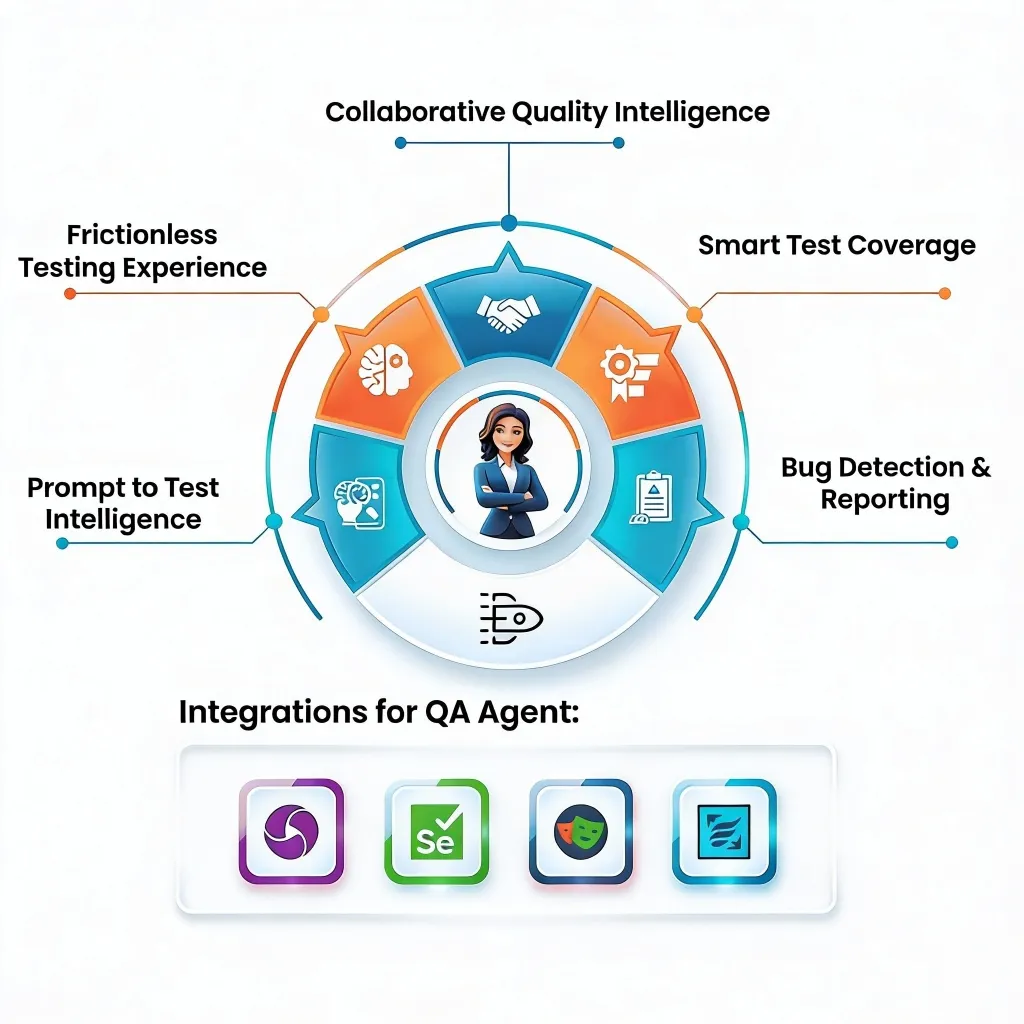
QA Agent overview — autonomous quality intelligence by ideyaLabs AiLabs

What the QA Agent Does — AI Agent Workflow for QA Teams

The QA Agent is part of ideyaLabs AiLabs. It is a smart tool for modern QA teams. It handles specs, test cases, test runs, and bug tracking.

Overview feature highlights:

From Test Design to Release, Seamlessly
Translates Requirements to Test Cases
Interactive Test Execution
Automated Testing & Validation
Continuous Quality Intelligence
QA engineers and engineering teams use it to run tests and manage test data. They scale test automation across the full delivery cycle.

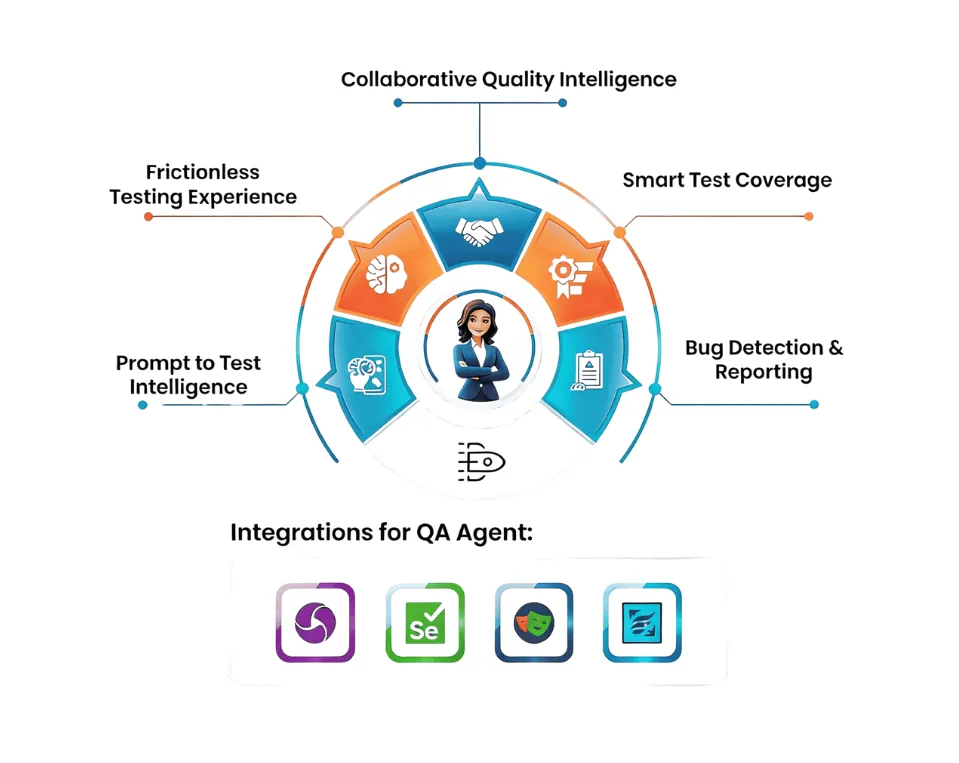
QA Agent architecture — smart test coverage, bug detection and reporting integrations by ideyaLabs

QA Agent Transforms Rigorous Validation into Unwavering Confidence for Every Release

QA Agent test automation — intelligent validation engine by ideyaLabs

Redefining Quality Through Intelligent Automation

Instantly Transform Requirements into Action

AI-driven parsing of requirements into test scripts for immediate execution, slashing setup time by 80%.

Rigorous Validation for Every Scenario

Comprehensive coverage ensuring no scenario is missed during testing cycles, from happy paths to chaos engineering.

Closed-Loop Defect Resolution

Automated reporting and fix verification cycles for faster release confidence, keeping your dev loop tight and efficient.

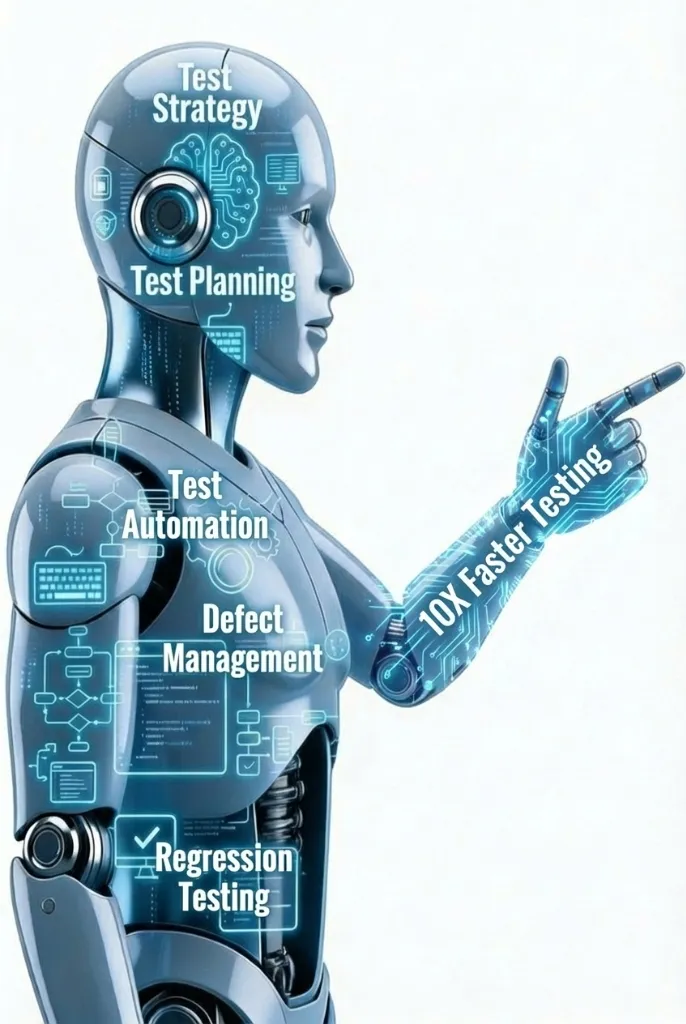
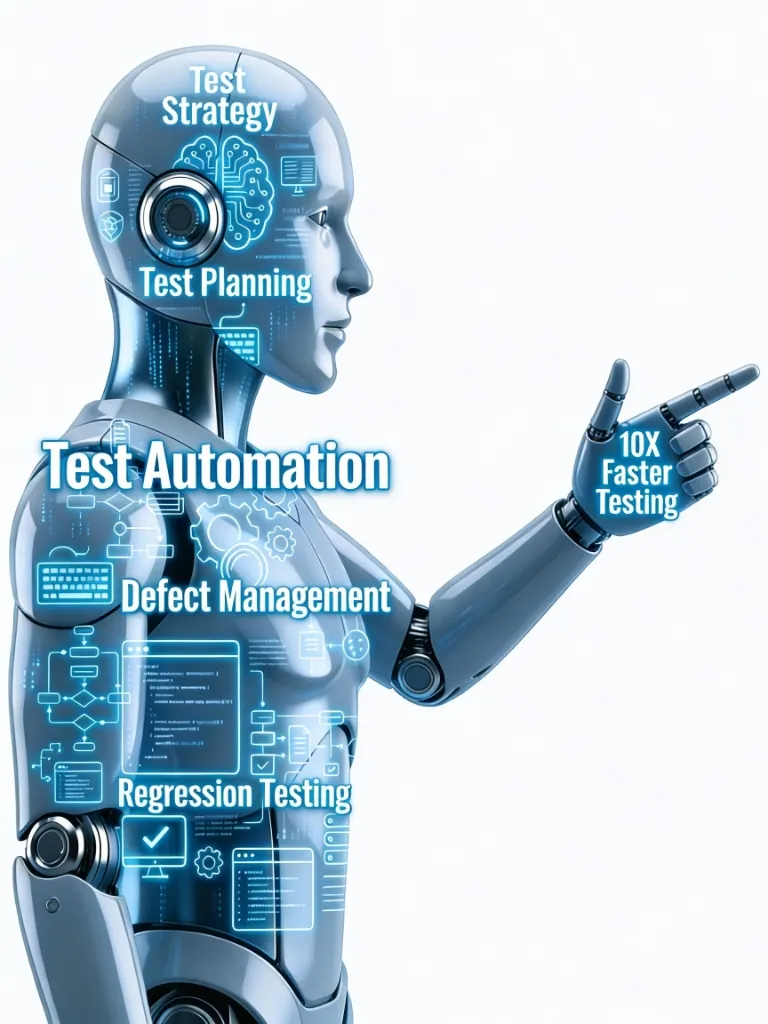
QA Agent validation — test strategy, test planning, and test automation by ideyaLabs
QA EXCELLENCE

QA Agent Transforms Rigorous Validation into Unwavering Confidence for Every Release

The ideyaLabs QA Agent delivers autonomous quality assurance. It turns business specs into runnable automation. It runs parallel test runs in CI/CD pipelines.

QA engineers get broader test coverage. Manual setup drops by 80%.

Redefining Quality Through Intelligent Automation

Instantly Transform Requirements into Action

AI-driven parsing turns requirements into runnable automation. Setup time drops by 80%.

Rigorous Validation for Every Scenario

Full coverage across testing cycles. Happy paths and edge cases are both covered.

Closed-Loop Defect Resolution

Automated reporting and fix verification. Faster release confidence. A tighter dev loop.

QA Agent: Frequently Asked Questions

Answers to common questions about the QA Agent on AiLabs by ideyaLabs.

What is the QA Agent and its role in AiLabs?

ideyaLabs built the QA Agent for AiLabs. It is a specialized AI test agent. Your QA team can move faster and still ship with confidence. This QA testing agent knows your product. It reads your specs, rules, and code. It plans test coverage, builds test cases, and runs tests. QA engineers and QA professionals spend less time on setup. They focus more on strategy. In AiLabs, it works with other specialized AI agents. Together they power agentic automation across your delivery workflow.

How does the QA Agent automate the end-to-end testing workflow?

The QA Agent automates the full QA process in three simple phases: 1. Requirement Analysis — It reads specs, user stories, and prompts. It sets clear test boundaries. Every test ties to a real business rule. 2. Test Suite & Case Generation — Generative AI builds suites for happy paths, edge cases, and negative flows. AI agents create test scripts and test code faster than manual work. 3. Execution & Bug Tracking — Agents run suites in parallel as scheduled test runs. Results go to tools like Jira. The system routes defects, re-runs tests, and checks fixes. This workflow removes gaps between planning, scripting, and execution.

What types of testing can the QA Agent perform?

The platform supports these test types: • Functional testing — validates features against requirements and acceptance criteria • Exploratory testing — probes user paths, boundary scenarios, and edge cases • UI testing — checks layouts, flows, and interaction behaviour • API testing — validates endpoints, payloads, and integrations with API automation support • E2E testing — runs full user journeys across frontend and backend • Regression testing — re-runs suites on every build to catch breaking changes Use it for sprint releases or nightly builds. It scales automated validation beyond what manual teams can handle.

Does the QA Agent integrate with QA platforms and bug tracking tools?

Yes. It works with QA tools, CI/CD pipelines, and trackers like Jira and GitHub. When a test fails, the agent logs the issue. It saves logs and screenshots. It opens a ticket with expected vs actual results. When a fix ships, it re-checks the test. Teams use AiLabs for test automation, defect routing, and release readiness. Full audit trails help with compliance. No more jumping between scripts and manual trackers.

How does the AI agent use prompts for test case generation?

Test cases come from generative AI and simple prompts. Turn specs, user stories, or plain-language prompts into structured cases. Cover happy paths, negative flows, and boundary limits. The agent decides what to test and how deep to go. It also builds realistic test data. Mock datasets cover normal and stress cases without using live data. Teams build cases in minutes. Manual work drops fast. Every QA task stays tied to a business rule.

Can the AI test agent run API testing and parallel execution?

Yes. The AI test agent runs API tests at scale. It runs UI and backend tests in parallel. Teams run tests on every commit. Test runs finish in minutes. Devs get fast feedback. Test code and scripts are built and re-run on their own. For fast-moving teams, parallel test automation runs the full regression suite on demand.

How does agentic automation differ from traditional QA automation?

Old automation uses fixed scripts and selectors. When the UI changes, scripts break. Teams waste time fixing scripts instead of adding coverage. Agentic testing is different. The platform knows what you meant to test. It self-heals when layouts change. It flags odd failures for humans. It uses smart agent design — from simple reflex agents to learning agents. You get broader validation coverage, fewer false alarms, and better results with each release.

What is the end-to-end AI agent workflow — and when should QA teams use AI?

Here is the end-to-end workflow: 1. Ingest requirements and source code context 2. Plan coverage and build structured cases 3. Run UI, integration, and E2E testing in parallel 4. Log failures and defects 5. Re-run tests until the suite passes The system handles repeat work. Lead QA and QA engineers review coverage and sign off on releases. Adopt an AI agent when manual test work slows you down. Use it when regression suites are hard to maintain. Use it when you need AI in QA to scale without hiring more people. Each AI agent in AiLabs supports your team. Your experts still decide what ships.
Platform Differentiation — Core Technology Advantage: Agentic Intelligence Core, Knowledge Hub, and MCP Connector
PLATFORM DIFFERENTIATION

Platform Differentiation — Core Technology Advantage

Agentic Intelligence Layer

QA Agent uses an Agentic Layer. It builds, runs, and improves tests end-to-end.

  • 1.Autonomous Generation — builds full test cases, including edge and negative paths
  • 2.Contextual Reasoning — understands workflows and dependencies
  • 3.Driven Intelligence — uses a knowledge graph for accurate, wide coverage
  • 4.Intent Translation — turns requirements into runnable test plans

Knowledge Hub

The Knowledge Hub gives AI the context it needs for your product:

  • Content Library — all docs in one place
  • Web Domain — pulls from your public site and product pages
  • Internal Docs — works with Confluence, Notion, and SharePoint
  • Code & Data — syncs Git repos and structured data
  • External Sources — adds approved public content
Your project knowledge becomes a graph — with 15+ years of QA expertise built in.

MCP — Universal Application Connector

MCP connects and runs tests on any app:

  • Live Discovery — finds UI elements in real time
  • Resilient Execution — adapts when the UI changes
  • Scalable Runtime — runs tests in parallel at enterprise scale
  • Unified Protocol — one interface for any app, no framework lock-in
BENCHMARKS & PERFORMANCE

Measured Impact & Platform Performance

Teams ship code faster with AI tools. But QA often stays manual. That slows releases and limits coverage. QA Agent fixes this on one platform — for test design, management, automation, and defects.

EFFORT REDUCTION

How the 80% Setup Reduction Is Measured

The 80% cut in manual QA setup comes from real workflow tests on the platform. We compare manual QA steps to AI output from one requirement or Jira ticket.

What teams see on the platform:

Autonomous parsing and parallel execution deliver immediate acceleration across test creation and coverage:

80%
Less test design effort
10×
Faster test case generation
Faster automation creation
70%
Better test coverage
TIME PER REQUIREMENT

Manual QA vs QA Agent — Time per Requirement

From one requirement or Jira ticket, QA Agent builds full test assets for you:

MindmapManual: ~1 hour
under 3 mins
FlowchartManual: separate doc work
under 3 mins
10–15 test scenariosManual: ~3 hours
2–5 mins
100–150 test casesManual: ~6 hours
5–10 mins
A full day of manual work can finish in minutes.
VELOCITY & QUALITY

More Gains Teams Report

Real productivity and coverage outcomes reported across enterprise delivery pipelines:

Measurable improvements across sprint validation, defect routing, and release verification:

Key efficiency & quality gains:
  • Jira to test cases: 70–80% less manual work
  • Defect reports: done in ~30 seconds; 60–70% less effort
  • Automation scripts: 70–80% less manual scripting
  • Parallel runs: 150 tests in ~4 hours → ~35 minutes (~85% faster)
  • Self-healing: up to 80% less script fixes when UI changes
  • Release calls: 30% faster with live reports
  • Edge cases: mindmaps and flowcharts find 20–30% more edge cases
REAL-WORLD OUTCOMES

Case Studies

Real-world enterprise quality assurance transformations powered by the QA Agent on AiLabs.

Faster Test Design from One Jira Ticket

A QA team got a new feature in Jira. The old process meant manual work across many tools — specs, scenarios, cases, docs, suites, runs, defects, and scripts. Test design ate most of the sprint.

The team used QA Agent on AiLabs. They imported the Jira ticket. AI analyzed it and built mindmaps, flowcharts, scenarios, and test cases with data and steps. QA reviewed and approved before running tests.

From one Jira ticket to complete test assets:
  • Mindmap: ~1 hour → under 3 minutes
  • Flowchart: manual doc work → under 3 minutes
  • 10–15 scenarios: ~3 hours → 2–5 minutes
  • 100–150 test cases: ~6 hours → 5–10 minutes

Overall:

  • 80% less test design effort
  • 10× faster test case generation
  • 70% better coverage
A full day of manual work finished in minutes. QA spent more time on strategy, less on setup.
Case Study: Faster Test Design from One Jira Ticket with QA Agent

Faster Regression with Parallel Runs and Self-Healing

An enterprise engineering team had 500 regression tests. Manual runs took two full days. Releases slowed to once every two weeks. Small UI changes constantly broke automated scripts.

The team switched to QA Agent. The agent generated automation scripts from approved test cases and ran them in parallel across cloud environments. Self-healing capabilities detected UI changes and fixed broken locators automatically.

Regression Suite Execution (500 tests):
  • Regression run time: 16 hours → 45 minutes
  • Release cycle: every 2 weeks → 2× weekly
  • Script maintenance: 12 hrs/sprint → 1 hr/sprint
  • Escaped defects: dropped 85% in 60 days

Overall:

  • 95% faster regression cycles
  • 90% less script maintenance
  • release velocity increase
Regression testing is no longer a bottleneck. The team ships multiple times a week with zero quality loss.
Case Study: Faster Regression with Parallel Runs and Self Healing QA Agent
ENTERPRISE ARCHITECTURE

End-to-End Platform Architecture

Autonomous, connected, and scalable infrastructure designed for modern enterprise engineering pipelines.

Traditional QA

8 Manual Steps
VS

QA Agent

One Continuous Flow
STEP 01Review requirements manually across docs
REQUIREMENTS
STEP 01Import Jira tickets; AI reads requirements instantly
STEP 02Write test scenarios by hand
SCENARIOS
STEP 02AI builds complete scenarios & edge cases
STEP 03Create test cases with manual data entry
TEST CASES
STEP 03Generates 100–150 cases with steps & data
STEP 04Build docs, mindmaps & flowcharts separately
DOCS & MAPS
STEP 04Auto-builds mindmaps & flowcharts in under 3 mins
STEP 05Assemble test suites and cycles by hand
SUITE CREATION
STEP 05QA reviews, approves & builds suites in-platform
STEP 06Run tests step-by-step manually
EXECUTION
STEP 06Parallel in-platform test runs across browsers
STEP 07Write Jira defect reports manually
DEFECT LOGGING
STEP 07AI writes defect reports & logs to Jira in 1 click
STEP 08Write automation scripts separately from scratch
AUTOMATION
STEP 08Turns approved cases into self-healing CI/CD scripts

Four Core Modules

Module 01

AI-Driven Test Design

Reads requirements. Builds mindmaps, flowcharts, scenarios, and test cases with data and expected results.

Module 02

Test Management

Runs suites and cycles in-platform. Creates Jira defects. Shows execution reports. No separate test tool needed.

Module 03

Automation Script Generation

Turns approved cases into scripts. Runs cross-browser tests. Schedules suites. Plugs into CI/CD.

Module 04

AI-Powered Defect Management

AI reads pass vs fail results. Writes title, summary, steps, severity, and priority. Creates Jira tickets in one click.

Platform Technology Stack

Client
Web AppAPI GatewaySocket Client
AI Layer
Agentic AIHybrid SearchRAGLangGraphKnowledge GraphMCP Server
Integrations
JiraTestRailNotionConfluenceSharePoint
LLMs
OpenAIAnthropicGrokGeminiCohereGroqVoyage
Data
MongoDBPineconeNeo4jRedisAWS S3
DevOps
GrafanaGitLabJenkinsS3
Frontend
ReactTailwind CSSRedux
Backend
PythonFastAPINode.jsRustMongoDB

Stop Testing Manually. Start Using the QA Agent.

Product quality can be autonomous. Don't let manual testing slow your releases. Let the platform validate at machine speed.

Book a demo with ideyaLabs today. See the QA Agent in action on AiLabs.

Book Demo